Working at a desk for several hours can become increasingly uncomfortable during pregnancy. Staying in one position for long periods may leave you dealing with lower-back tension, stiff shoulders, hip discomfort, or general muscle fatigue by the end of the workday. Pregnancy itself can also change posture and body mechanics, making these areas feel more strained. In fact, a 2024 systematic review of 38 studies involving more than 21,000 pregnant women found that around 63% experienced lumbopelvic pain during pregnancy.
For women balancing pregnancy with a busy office or work-from-home routine, small changes to movement and posture can make a difference. Prenatal massage may also be one option for relaxation and managing muscular discomfort when it is appropriate for the individual pregnancy. But how can it help a woman who spends much of her day at a desk, and what should she know before booking a session?
Why Desk Work Can Become More Uncomfortable During Pregnancy
Pregnancy brings physical changes that can affect how your back, pelvis, and surrounding muscles feel throughout the day. As your body changes, discomfort may become more noticeable when you spend long periods sitting at a desk. Pregnancy-related back and pelvic pain can also be aggravated by prolonged sitting or staying in one position for too long.
For a woman working at a desk, this may mean feeling tension across the lower back, stiffness around the hips, or discomfort after sitting through long meetings or work sessions. Supporting your back while sitting and changing position regularly can help make the workday more comfortable.
However, not every type of pregnancy-related pain should be managed with massage. Before booking a prenatal massage, it is important to consult your doctor, midwife, or other pregnancy care provider, particularly if you have ongoing, severe, or unusual pain, a high-risk pregnancy, or any pregnancy-related complications. If your doctor advises that massage is appropriate, a therapist trained in prenatal massage can then adapt the session to your stage of pregnancy and comfort.
Can Prenatal Massage Help Women Who Work at a Desk?
Pregnancy massage may help some pregnant women relax and manage muscle tension or general discomfort, including discomfort that can develop after a long day at a desk. Research on massage and other hands-on therapies during pregnancy suggests that they may provide some relief from back or pelvic discomfort, although the evidence is not strong enough to consider massage a treatment for pregnancy-related pain.
If you sit at a desk for most of the day, you may have more tension in your lower back, shoulders, neck, or hips. A prenatal massage can focus on these areas, with the pressure and position changed to suit your stage of pregnancy and comfort.
Keep in mind that massage is not a replacement for medical care. If you have ongoing or severe pain, or any pregnancy-related complications, talk to your doctor before booking a massage. Your doctor can let you know whether massage is suitable for you.
What Makes Prenatal Massage Different From a Regular Massage?
Prenatal massage is adapted to the physical changes that happen during pregnancy. It is not simply a regular massage with a different name. The therapist needs to consider your stage of pregnancy, comfort, positioning, and any guidance provided by your healthcare professional.
Positioning matters
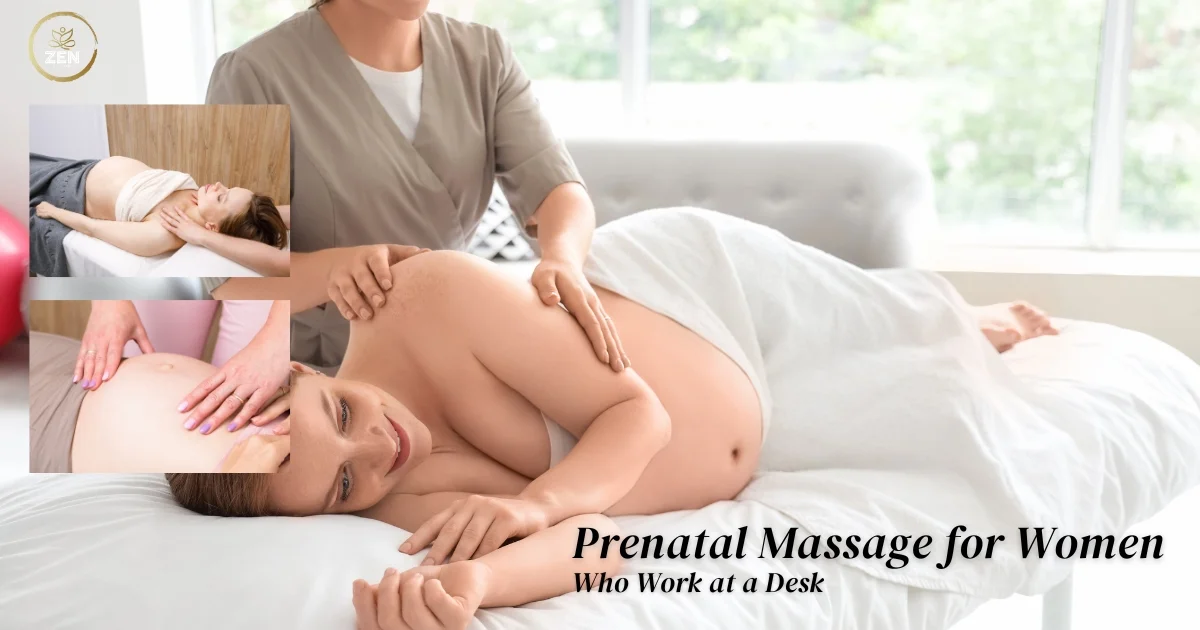
As pregnancy progresses, lying in certain positions for an extended period may become uncomfortable. The American College of Obstetricians and Gynecologists (ACOG) notes that side-lying is an appropriate position for massage during pregnancy. Support such as pillows may also be used to help you remain comfortable during the session.
Pressure and techniques are adjusted.
A prenatal massage therapist should adapt the session rather than using the same pressure and techniques used for a non-pregnant client. You should also communicate if any position or pressure feels uncomfortable.
Because every pregnancy is different, consult your doctor or maternity care provider before getting a prenatal massage, particularly if you have a medical condition, pregnancy complication, or concerns about your symptoms.
Making the Workday More Comfortable During Pregnancy

Prenatal massage can be one part of managing everyday discomfort, but it should not replace healthy workplace habits. Small adjustments can help reduce the amount of time you spend in one position during the working day.
Change positions regularly
Try not to remain seated in the same position for prolonged periods. Standing up, walking briefly and changing your position between tasks can help prevent stiffness.
Support your lower back.
A chair that provides good back support can make sitting more comfortable. The NHS recommends keeping your back well supported while sitting during pregnancy.
Pay attention to your workstation.
Keep your screen and work equipment positioned comfortably so you do not have to repeatedly lean forward or hold your neck in an awkward position.
These simple measures can complement prenatal care and, when appropriate, prenatal massage. If discomfort is persistent or becoming worse, speak with your doctor rather than relying on massage alone.
When Should You Speak to Your Doctor Before a Prenatal Massage?
Consulting your doctor or maternity care provider before a prenatal massage is an important safety step, especially if you have concerns about your pregnancy or are experiencing symptoms that are not part of your usual discomfort.
Speak with your healthcare provider before booking a massage if you have:
- Severe or ongoing back, pelvic, or abdominal pain
- Vaginal bleeding or fluid leakage
- Regular painful contractions
- Significant dizziness or weakness
- Chest pain
- Calf pain or swelling
- A high-risk pregnancy or a pregnancy-related complication
These symptoms may need medical attention rather than massage. ACOG recommends stopping physical activity and seeking medical advice if symptoms such as bleeding, fluid leakage, painful contractions, dizziness, chest pain, or calf pain and swelling occur.
If your healthcare provider confirms that prenatal massage is suitable for you, choose a therapist who is trained to work with pregnant clients.
Prenatal Massage at Home for Working Women in Dubai and Abu Dhabi
For pregnant women balancing work and personal responsibilities, travelling to a spa after a long day at a desk may not always be convenient. An at-home prenatal massage can provide another option for women in Dubai and Abu Dhabi who prefer to receive their session in a familiar environment.
Zen at Home provides home massage services in both cities, allowing clients to arrange a massage at home rather than adding another journey to their schedule. For a working woman in areas such as Dubai Marina, Business Bay, Al Reem Island, or Khalifa City, this can make scheduling a little easier.
Before arranging a prenatal massage, however, it is important to consult your doctor or maternity care provider and confirm that massage is appropriate for your individual pregnancy. Once cleared, let the therapist know how far along you are, where you are experiencing discomfort, and which positions feel comfortable.
A prenatal massage should support your comfort, not replace proper antenatal care or medical advice.
Making Pregnancy More Comfortable While Working

Working at a desk during pregnancy can make back, hip, neck, and shoulder discomfort more noticeable. Regular movement, proper support and appropriate prenatal care can help you manage your workday more comfortably. If your doctor confirms that massage is suitable for you, prenatal massage at home can be a convenient option for relaxation and muscle comfort. Zen at Home offers at-home massage services in Dubai and Abu Dhabi, so you can relax in your own space without adding another trip to your day.
FAQs
Can I get a prenatal massage if I work at a desk all day?
You may be able to get a prenatal massage if your doctor or maternity care provider confirms it is suitable for your pregnancy. A trained prenatal massage therapist can adapt the session to your stage of pregnancy and comfort.
Can prenatal massage help with back pain from sitting?
Prenatal massage may help with muscle tension and some pregnancy-related discomfort. However, persistent or severe back pain should be discussed with your doctor before using massage for relief.
Is prenatal massage safe during pregnancy?
Prenatal massage can be appropriate for many pregnant women when performed using pregnancy-appropriate techniques. Always consult your doctor or maternity care provider before booking a prenatal massage, particularly if you have complications or medical concerns.
What position is used during a prenatal massage?
Side-lying is an appropriate position for massage during pregnancy, according to ACOG. Pillows or other support can be used to improve comfort during the session. (acog.org)
Can I get a prenatal massage at home in Dubai or Abu Dhabi?
Yes. Zen at Home provides at-home massage services in Dubai and Abu Dhabi. If your healthcare provider confirms that prenatal massage is appropriate for you, an at-home session can be a convenient option after a busy workday.